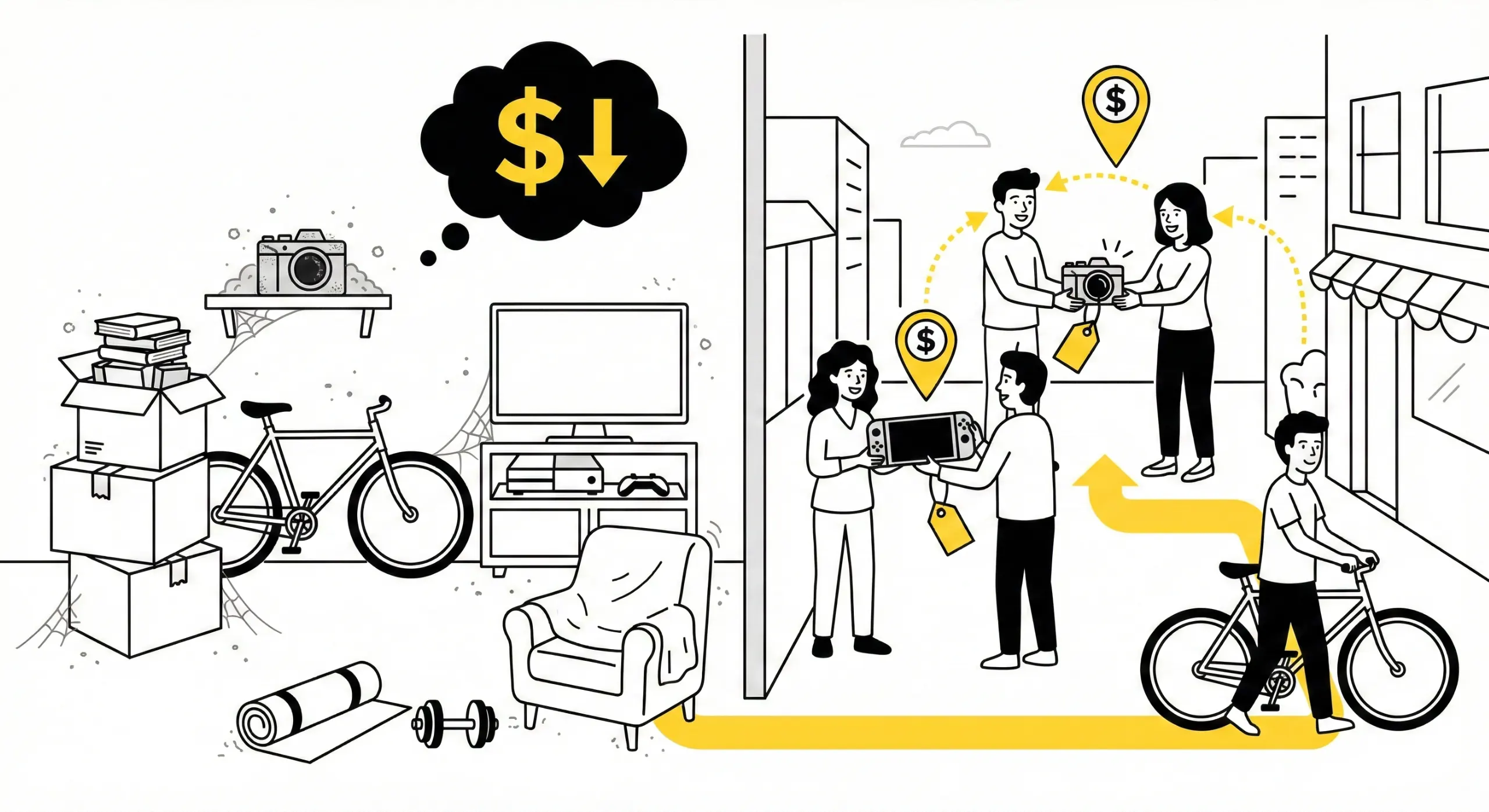

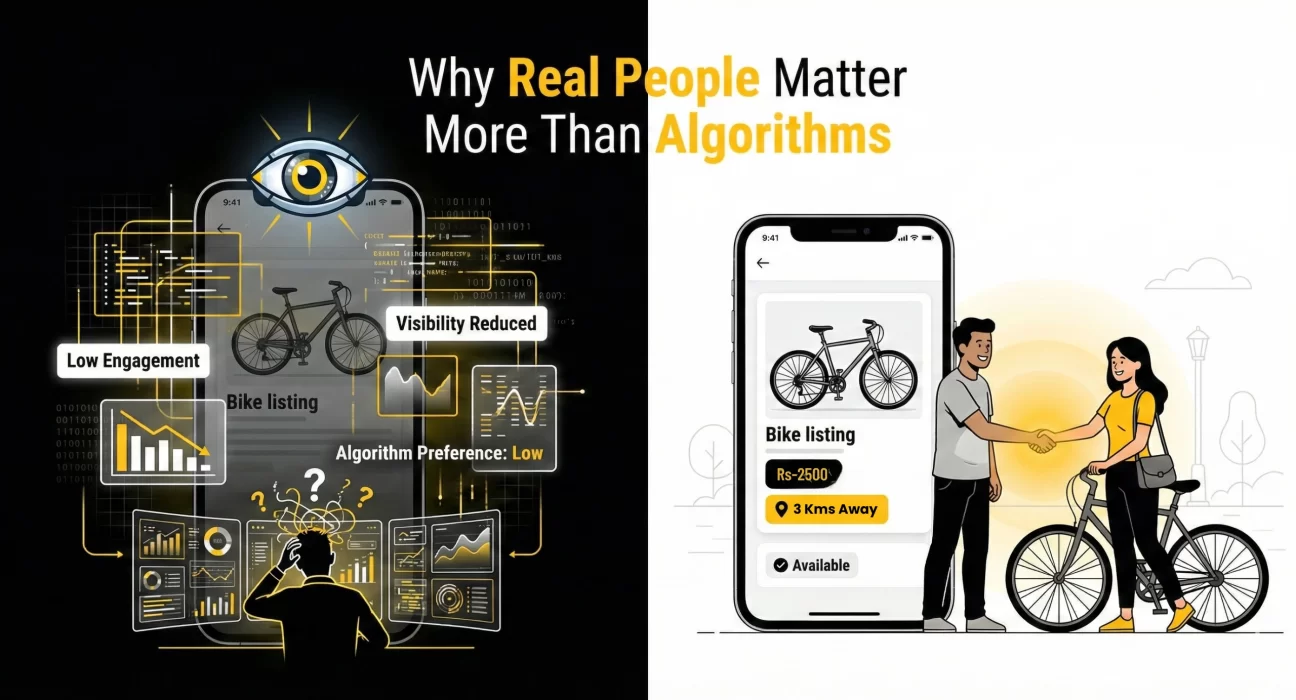
You’ve listed your bike on a large marketplace. The platform’s algorithm decides your listing isn’t “engaging” enough, so it shows it to fewer people. You don’t know why. You don’t know how to fix it. You just know your bike isn’t selling.
Meanwhile, your friend lists a similar bike on a local platform. No algorithm decides who sees it. It’s simply visible to people nearby searching for bikes. Three people message within two days. One comes to inspect, test rides it, and buys it that afternoon.
The difference isn’t luck. It’s that one platform puts an algorithm between you and buyers, while the other connects you directly with real people who can actually purchase.
Algorithms are supposed to help by showing your listing to “the right people.” In practice, they often just add an unpredictable layer of complexity that you can’t control or understand.
When you buy and sell locally through simple classifieds like Sympl, real people find your listings through straightforward search – not because an algorithm decided to show it to them. You’re visible to nearby buyers based on what they’re looking for, not on what a system thinks might maximize engagement.
How Algorithms Changed Online Selling
Ten years ago, most online marketplaces worked simply: you listed something, and anyone searching could find it. Newest listings appeared first, or you could sort by price, location, or relevance.
Then platforms started using algorithms to “improve” the experience.
Algorithms decide who sees your listing
On modern platforms, your listing doesn’t automatically appear in search results just because someone searched for what you’re selling.
An algorithm evaluates your listing, your seller profile, engagement metrics, and dozens of other factors. Then it decides whether to show your item, and to whom. You might create a perfect listing, but if the algorithm doesn’t favor it, potential buyers never see it.
The criteria are hidden and constantly changing
What makes an algorithm show your listing? Most platforms won’t tell you exactly. Freshness matters, but how much? Engagement helps, but what counts as engagement? Does having more photos help? Better titles? Certain keywords?
You’re left guessing, and the rules change without notice. What worked last month might not work today.
Optimization becomes necessary
To work with algorithms, you need to “optimize” your listings – use certain keywords, structure titles in specific ways, upload photos in particular orders, refresh listings regularly.
This turns selling into a game of figuring out what the algorithm wants, rather than simply communicating clearly with buyers.
Your success depends on factors you can’t control
The algorithm might favor newer sellers to give them a boost. Or it might favor established sellers with good ratings. It might prioritize listings with lower prices, or those that get quick responses. You have no idea, and you can’t control most of these factors anyway.
When you sell items fast through local classifieds, you skip this entire layer of unpredictability. Your fridge is visible to people searching for fridges in your area. Simple.
What Gets Lost When Algorithms Take Over
Algorithms are designed to maximize platform goals – usually engagement and time-on-site. But these goals don’t always align with yours.
Direct connections get interrupted
You want to connect with someone nearby who needs a washing machine. That person wants to find a washing machine locally.
An algorithm stands between you, deciding whether this connection should happen based on criteria that have nothing to do with whether the buyer actually needs what you’re selling.
This interruption is unnecessary and often counterproductive.
Context and nuance disappear
Algorithms can’t understand context. They don’t know that your bike is perfect for a college student on a budget, or that your sofa would be ideal for someone furnishing a small apartment.
They just see data points, price, category, view count and make decisions accordingly.
Real people understand context. A buyer looking at your listing can see it matches their needs. An algorithm might hide it from them because some metric didn’t meet a threshold.
Human judgment gets replaced with metrics
Is your listing good? An algorithm doesn’t care about clear communication, honest descriptions, or helpfulness
It cares about click-through rates, time spent on page, conversion percentages. You’re optimizing for metrics that might have nothing to do with actually helping buyers find what they need.
Trust becomes harder to establish
When buyers know their search results are algorithmically filtered, they wonder: “Am I seeing the best options, or just the ones the platform wants me to see?”
This introduces doubt. With straightforward search on local platforms, what you see is what’s available. No hidden filtering, no promotion of certain listings, just honest results.
Selling becomes a technical skill
Good sellers shouldn’t need to be algorithm experts. You should be able to describe your item clearly, price it fairly, and connect with interested buyers.
Algorithm-driven platforms turn this simple process into a game of optimization and gaming the system.
How Real Human Search Works Better
When platforms don’t insert algorithms between sellers and buyers, transactions happen more naturally.
People search for what they actually want
A buyer in Pune looking for a used laptop types “laptop Pune” or “second-hand laptop” and sees listings from sellers in Pune. No algorithm deciding that some laptops are “more relevant” based on hidden criteria. Just straightforward search results.
Location naturally filters results
When you buy and sell locally, geography does the filtering – no algorithm needed.
Someone searching in Bangalore sees Bangalore listings. Someone in Delhi sees Delhi listings. Everyone sees what’s actually available and accessible to them.
Platforms like Sympl use this natural geographic filtering, making search results inherently relevant without algorithmic manipulation.
Sellers control their visibility
Your listing’s visibility depends on factors you control: clear title, accurate description, fair price, good photos. Not on mysterious algorithmic preferences or whether you’ve figured out the current “optimization” tricks.
Buyers trust the results
When search results are straightforward – sorted by recency or relevance based on keywords – buyers trust they’re seeing what’s actually available. No suspicion that promoted listings or algorithmic preferences are hiding better options.
Communication drives success, not optimization
Your listing succeeds because you’ve communicated clearly what you’re selling and why it’s a good option. Not because you’ve gamed an algorithm or paid for better placement.
Real Examples of People Versus Algorithms
The laptop that algorithms buried
You list a well-priced laptop with good photos and detailed descriptions. But you’re a new seller with no history.
The algorithm decides to show your listing to fewer people, prioritizing established sellers instead. Days pass with almost no views. You drop the price, confused about why it’s not working.
The problem wasn’t your listing – it was that the algorithm didn’t give it a chance.
The laptop that people found immediately
Same laptop, listed on a local platform. Students and working professionals in your city searching for laptops see it in results.
Five people message within two days. One visits, tests it, and buys it. The platform didn’t decide your listing wasn’t worthy – it just showed it to people searching for what you’re selling.
The furniture hidden by engagement metrics
Your sofa listing has few views because it’s new. The algorithm interprets low views as low interest, so it shows the listing to even fewer people.
You’re caught in a cycle: low visibility leads to low engagement, which the algorithm uses to justify even lower visibility.
Meanwhile, the sofa is fine – priced well, good condition. It just never got a fair chance to find buyers.
The furniture that sold through direct search
Same sofa on a Sympl classifieds platform. Families and individuals furnishing homes in your area search “sofa” with your location.
Your listing appears. People message with genuine interest. Someone visits the next day and buys it. No algorithm decided whether your sofa deserved visibility – it was simply available to those searching for it.
How Local Platforms Keep People Central
Local buying and selling naturally prioritizes human connections over algorithmic mediation.
Search reflects actual intent
When someone searches “bike HSR Layout Bangalore,” they want to see bikes available in HSR Layout, Bangalore. That’s exactly what they get. The platform doesn’t “interpret” their intent or show them something else it thinks they might prefer.
Sellers know who they’re reaching
You list your fridge in Pune. You know it’s visible to people in Pune searching for fridges. No mystery about whether an algorithm is showing it or hiding it. No wondering if you need to do something different to get visibility.
Direct communication starts immediately
When a buyer sees your listing and is interested, they message you directly. No platform intermediary trying to guide the conversation or extract information. Just two people coordinating a transaction.
Community dynamics matter more than metrics
In local marketplaces, reputation and community standing matter. Buyers prefer sellers with local presence and good interactions. Sellers value buyers who are respectful and follow through. These human dynamics create better transactions than algorithmic scoring ever could.
Transactions feel natural, not engineered
Meeting someone from your neighborhood to sell a washing machine feels like normal commerce. Not like navigating a system designed to maximize platform engagement. Just people helping each other meet their needs.
Cost and Time Benefits of Human-Centered Selling
Predictable visibility
You know your listing will be visible to local searchers. No algorithmic uncertainty. This predictability lets you price and present items confidently without second-guessing whether the platform is working against you.
No time wasted on optimization
You don’t need to research algorithm tricks or constantly refresh listings to game the system. Create a clear, honest listing and it works. Your time goes to actual selling, not platform manipulation.
Faster sales through direct connections
When the right buyer can find your listing without algorithmic interference, transactions happen faster. No waiting for an algorithm to “discover” your listing deserves visibility.
Better prices without gaming
You don’t need to underprice items to trigger algorithmic favor. Fair pricing works because real people evaluate whether the price makes sense, not an algorithm optimizing for some engagement metric.
Who Benefits Most from People-Centered Platforms
Sellers who want transparency
If you prefer knowing your listing is visible and that its success depends on how you present it – not on hidden algorithmic factors – human-centered platforms deliver this clarity.
First-time sellers intimidated by optimization
If you’re new to selling and don’t want to learn algorithm gaming, simple platforms let you succeed through clear communication and fair pricing.
Buyers seeking genuine options
If you’re tired of wondering whether search results are showing you what’s actually available or what the platform wants to promote, straightforward local search gives you confidence.
Anyone valuing directness over mediation
Whether buying or selling, people who prefer human interaction over system-mediated transactions find local platforms more aligned with their values.
Conclusion:
Algorithms exist primarily to benefit the platform – maximizing engagement, extracting data, creating opportunities for paid promotion.
They’re not designed to help you sell your bike faster or help buyers find the best local options. They’re designed to keep users scrolling, clicking, and generating platform value.
When you buy and sell locally through platforms like Sympl, the focus shifts back to what actually matters: connecting real buyers with real sellers in the same area who can complete real transactions.
No algorithm deciding your listing isn’t engaging enough. No mystery about why you’re not getting visibility. No gaming required to succeed.
Just straightforward search where people looking for what you’re selling can actually find it. Where your success depends on clear communication and fair pricing, not on cracking algorithmic codes.
That’s commerce as it should be – human, direct, and practical.
Algorithms have their place. But in local buying and selling, real people searching for real items they need, connecting directly with nearby sellers, will always work better.