
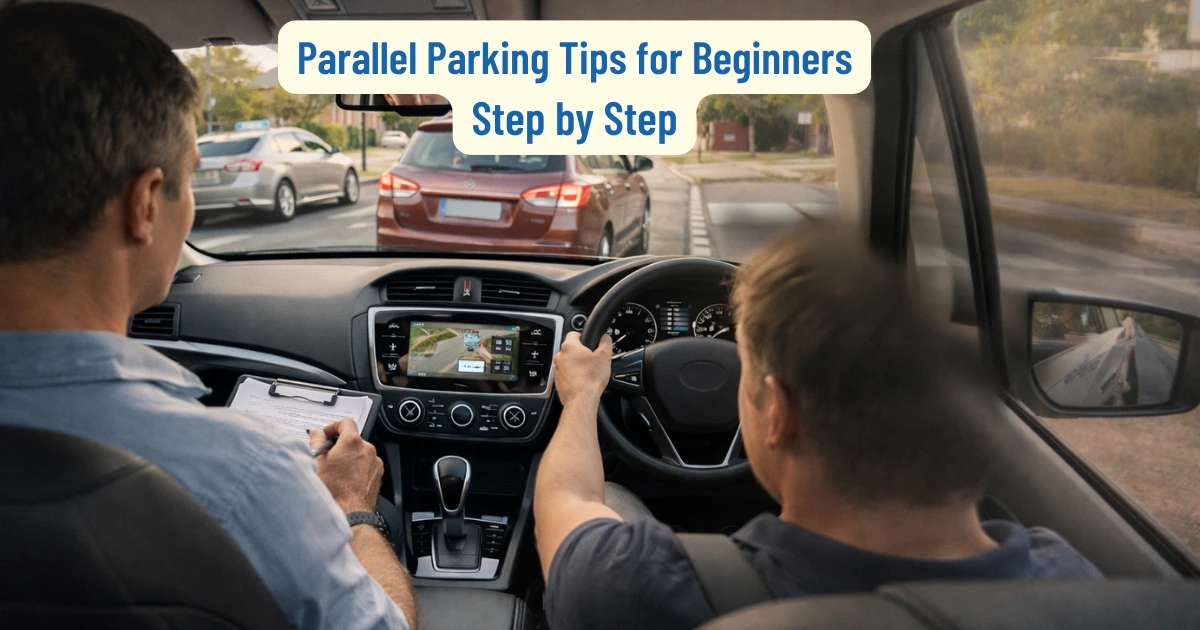
Ask any learner driver what manoeuvre makes them most nervous, and parallel parking will top the list almost every time. In this guide, Parallel Parking Tips for Beginners Step by Step Trueway Driving School a professional driving school in Perth that has guided hundreds of beginners through this exact challenge reveals the secret: parallel parking is far more learnable than it looks. With the right step-by-step method, most drivers master it faster than they ever expected. Whether you’re preparing for your WA driving test or simply want to stop avoiding street parking forever, this guide will walk you through everything you need to know clearly, practically, and without the overwhelm.
1. Why Parallel Parking Feels So Hard
Before we get into the steps, let’s address the fear head-on.
The Psychology of Parking Dread
Parallel parking feels intimidating for a very specific reason: it combines reversing (which most beginners find unnatural), spatial judgement , and social pressure (the horror of holding up traffic while you attempt it). Stack those three things together, and it’s no wonder learners feel their heart rate spike at the sight of a kerbside gap.
But here’s the reassuring truth: parallel parking is a purely mechanical skill. Unlike navigating unpredictable traffic or making split-second hazard decisions, parallel parking follows a fixed, repeatable process. Once your body learns that process, it becomes close to automatic like learning a dance routine. Awkward at first, fluid once the steps are memorised.
What the WA Driving Test Actually Expects
For the WA practical driving assessment, you may be asked to perform a parallel park during your test. Examiners are not looking for perfection they’re assessing whether you can complete the manoeuvre safely, with appropriate observation, reasonable accuracy, and without mounting the kerb or creating a hazard. Understanding this takes some of the pressure off: you don’t need to be flawless, you need to be safe and competent.
2. Before You Start: Setting Yourself Up for Success
Good parallel parking begins before you even start reversing. Getting these fundamentals right makes every step that follows easier.
Choosing the Right Space
As a beginner, aim for a space that is at least one and a half times the length of your car ideally closer to twice the length. This gives you the room to complete the manoeuvre without the precision demands of a tighter gap. As your skills develop, you’ll be able to work with smaller spaces comfortably.
A space that’s too tight is always a sign to move on and find another. There’s no shame in it even experienced drivers pass on spaces that aren’t worth the effort.
Checking Your Surroundings
Before you begin any parking manoeuvre, a full observation check is essential:
- Check your interior mirror and driver’s side mirror
- Signal left to indicate your intention to park
- Check your blind spot over your left shoulder
- Assess whether any cyclists, pedestrians, or vehicles are approaching
- Make eye contact with any drivers behind you where possible
Your driving instructor in Perth will emphasise that observation isn’t a one-time check at the start it’s continuous throughout the entire manoeuvre.
Vehicle Setup
- Adjust your left side mirror downward slightly so you can see the kerb during the manoeuvre this is a game-changer for spatial awareness
- Ensure your seat position gives you a clear sightline through the rear window when you turn to reverse
- If you’re in a manual vehicle, be ready to use clutch control to maintain a slow, steady speed this is one area where automatic driving lessons Perth offer a genuine advantage for beginners, as there’s no clutch to manage
3. The Step-by-Step Parallel Parking Method
Here it is the core method used in professional driving lessons in Perth, broken down into clear, repeatable steps.
Step 1: Position Your Car Alongside the Front Vehicle
Pull up parallel to the car in front of your target space, positioning your vehicle:
- Approximately 0.5–1 metre away from the parked car (not too close, not too far)
- With your rear bumper roughly aligned with the rear bumper of the parked car
Signal left. Check mirrors and blind spot. Come to a stop.
Step 2: Reverse Slowly and Turn the Wheel Towards the Kerb
Select reverse gear. Begin moving slowly and it cannot be overstated how important slow is here. Speed is the enemy of parallel parking.
As you begin reversing, turn your steering wheel towards the kerb (to the left, in Australia). A common reference point: when your rear-view mirror shows the rear of the front parked car, begin turning. Watch your left mirror to monitor your distance from the kerb.
Check all mirrors and look through the rear window as you reverse. Your observation must be active, not a glance at the start and done.
Step 3: Straighten the Wheel as Your Car Enters the Space
As the front of your car begins to clear the rear of the vehicle in front, and your car’s body is at roughly a 45-degree angle to the kerb, begin straightening your steering wheel. Your car is now sliding diagonally into the space.
A useful reference: when you can see the full front of the car behind you in your left mirror, it’s typically time to begin straightening. Continue reversing slowly.
Step 4: Turn the Wheel Away From the Kerb to Bring the Front In
Once your car is sitting at an angle in the space with the rear close to the kerb, turn your steering wheel away from the kerb (to the right). This swings your front end in toward the kerb while your rear holds position.
Continue reversing slowly watching both the front clearance from the car ahead and the kerb in your left mirror until your car is roughly parallel to the kerb and within 30 centimetres of it.
Step 5: Straighten Up and Adjust
Come to a stop. Assess your position: are you parallel? Are you within a reasonable distance from the kerb? If adjustments are needed, use small forward and backward movements to correct your position.
Apply your handbrake, select neutral (or Park for automatics), and check both mirrors and your blind spot before opening your door.
4. Common Parallel Parking Mistakes and How to Fix Them
Knowing what typically goes wrong is as useful as knowing the correct steps because when something feels off mid-manoeuvre, you’ll know exactly what to correct.
Mistake 1: Going Too Fast
This is the single most common error. Speed robs you of reaction time and makes every input feel more dramatic than it needs to be. If you’re struggling, the first fix is always to slow down even more than you think is necessary.
Mistake 2: Turning Too Early or Too Late
Turning the wheel too early means your car enters the space at too shallow an angle and you risk clipping the car in front. Too late, and you swing in too steeply and risk the rear hitting the kerb. The reference points in Steps 2 and 3 exist precisely to solve this use them consistently and your timing will improve rapidly.
Mistake 3: Not Checking Mirrors Continuously
Beginners often check mirrors at the start and then forget them entirely as they focus on the steering. Continuous observation is not optional it’s what keeps the manoeuvre safe and what examiners are specifically watching for during the driving test.
Mistake 4: Giving Up Mid-Manoeuvre
If things aren’t going perfectly, don’t panic and abandon the space. Pull forward slightly (with full observation checks), reassess your position, and continue. A corrective movement is not a failure it’s good driving judgement.
Mistake 5: Finishing Too Far From the Kerb
If you’re consistently finishing more than 30–40 centimetres from the kerb, you’re either not turning sharply enough toward the kerb in Step 2, or straightening the wheel too early in Step 3. Ask your instructor to observe your reference points and identify exactly where the timing is off.
5. Manual vs. Automatic: Does It Make a Difference for Parking?
The honest answer is yes and it’s worth understanding how before your next lesson.
Parallel Parking in an Automatic Vehicle
Automatic driving lessons Perth give beginners a notable advantage when it comes to parking manoeuvres. Without the clutch to manage, you can focus entirely on steering inputs, observation, and spatial judgement. The car moves smoothly and slowly at near-idle in reverse, making fine control significantly easier.
For learners who find parallel parking particularly stressful, this alone can be a compelling reason to start with automatic lessons.
Parallel Parking in a Manual Vehicle
Manual driving lessons Perth add the layer of clutch control to every manoeuvre, including parallel parking. In a manual, maintaining the very slow speed needed for precise parking requires careful clutch and brake coordination a skill that takes practice but is absolutely learnable.
The key technique in a manual is clutch riding holding the clutch just at the biting point to keep the car moving at a crawl without stalling. Your instructor will guide you through this in detail.
6. Practice Tips to Master Parallel Parking Outside of Lessons
Professional instruction gets you the method. Repetition builds the muscle memory. Here’s how to accelerate your progress between lessons.
Use Markers in an Empty Car Park First
Before practising on a real street, use an empty car park and set up two markers (witches hats, cardboard boxes, or even folded jumpers) to represent the gap between two parked cars. This removes the social pressure of real traffic and lets you focus purely on the technique.
Repeat the full sequence signal, position, reverse, turn, straighten, adjust at least ten times per session. Repetition at low stakes builds the habit that performs under pressure.
Use a Kerb With No Surrounding Traffic
When you’re ready for real conditions but not a busy street, find a quiet residential road with a long, empty stretch of kerb. Practise the manoeuvre repeatedly, focusing on your reference points and keeping your movements slow and deliberate.
Ask Your Supervising Driver for Calm, Specific Feedback
If a friend or family member is supervising your practice, ask them for specific observations rather than general comments. “Your rear was about 50 centimetres from the kerb” is useful. “That wasn’t bad” is not. Specific feedback gives you something concrete to adjust.
7. How Truewaydrivingschool Teaches Parallel Parking in Perth
Learning parallel parking from a YouTube video is a start but there’s no substitute for having an experienced instructor in the passenger seat, giving you real-time feedback in real Perth conditions.
Structured, Step-by-Step Instruction on Real Roads
At Truewaydrivingschool, parallel parking is taught systematically starting with the method in a low-pressure environment, then progressively moving to realistic street conditions as confidence builds. Instructors use consistent reference points tailored to each student’s vehicle and sightlines, meaning the technique is personalised, not generic.
Services for Every Type of Learner
- Automatic driving lessons Perth ideal for beginners who want to focus on parking technique without the added complexity of clutch control
- Manual driving lessons Perth comprehensive instruction covering clutch management alongside all key manoeuvres including parallel parking
- Lessons across Perth suburbs students practise on the types of streets they’ll actually encounter on test day
Why Perth Learners Trust Truewaydrivingschool
- Experienced, fully accredited instructors who teach parking with patience, precision, and personalised reference points
- High test pass rate students arrive at the WA driving test having practised every required manoeuvre until it’s genuinely comfortable
- Flexible lesson scheduling morning, afternoon, and weekend availability to suit students and working adults
- Calm, structured learning environment no pressure, no judgement, just clear and consistent guidance
- Perth road knowledge instructors know the local streets, test routes, and parking conditions that matter
If parallel parking has been the thing standing between you and test-day confidence, a few targeted sessions with Truewaydrivingschool can change that entirely.
Conclusion:
Parallel parking went from your biggest fear to a routine part of your driving life faster than you think once you have the right method, consistent practice, and a patient instructor in your corner. The steps in this guide give you a proven, repeatable process. Applying them with calm repetition does the rest.
Remember: slow is smooth, smooth is accurate, and accurate is confident. Every expert parallel parker you see on Perth streets started exactly where you are nervous, unsure, and convinced the car was never going to fit.
When you’re ready to practise with professional guidance, Trueway Driving School is ready for you. Whether you book automatic driving lessons Perth to focus purely on technique, or commit to manual driving lessons Perth for full driving flexibility Truewaydrivingschool experienced instructors will have you parking confidently on Perth streets well before test day.