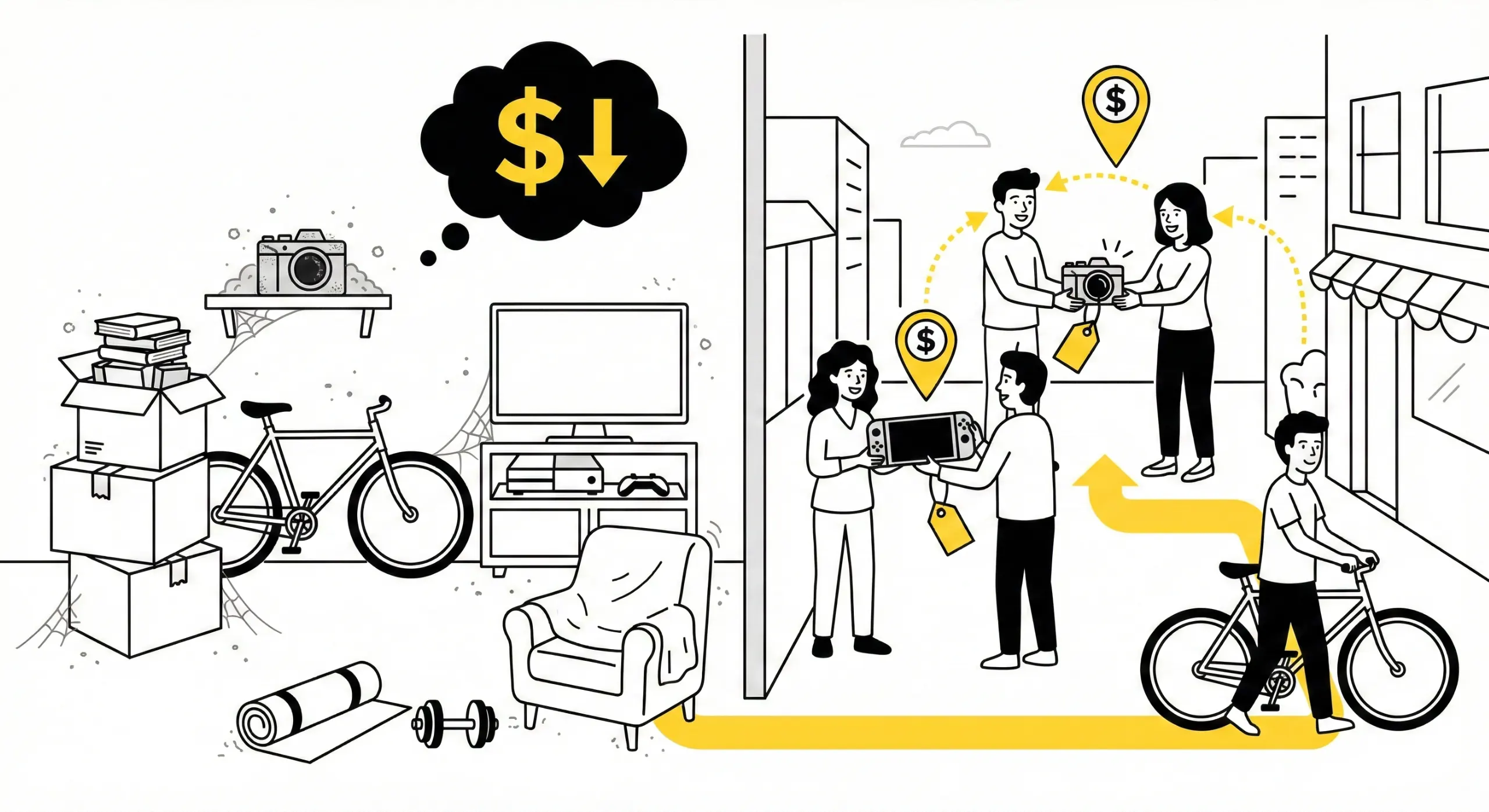

You need to sell your old refrigerator before moving next month. You check an e-commerce app,it wants seller registration, bank account linking, product categorization, shipping partner selection, and quality certifications. For a used fridge you just want to sell to someone nearby. Meanwhile, your neighbor sold furniture last week by posting on a local platform. A buyer from the same area came, saw it, paid, and took it. Done in three days.
This is the fundamental question many people face: should you use a full-featured e-commerce app or a simple local platform? E-commerce apps are built for professional sellers shipping products nationally. Local platforms and simple classifieds are built for everyday people selling used items to nearby buyers. Understanding when each approach makes sense saves you time, money, and frustration.
What E-Commerce Apps Are Actually Built For
E-commerce platforms serve a specific purpose that often doesn’t match individual selling needs.
- Professional selling at scale: They’re designed for businesses selling multiple items, managing inventory, processing hundreds of orders.
- National or international shipping: The entire infrastructure assumes products will be packaged, labeled, and shipped across distances.
- New or refurbished products: Most e-commerce apps expect standardized products with warranties, return policies, and quality guarantees.
- Complex logistics: Integration with courier services, payment gateways, return management systems, customer service workflows.
- Business compliance: GST registration, seller verification, business documentation, tax reporting.
This complexity makes sense for businesses but creates unnecessary barriers for individuals selling a few used items locally.
Why E-Commerce Apps Complicate Simple Local Sales
When you’re just selling your old bike or study table, e-commerce apps introduce problems.
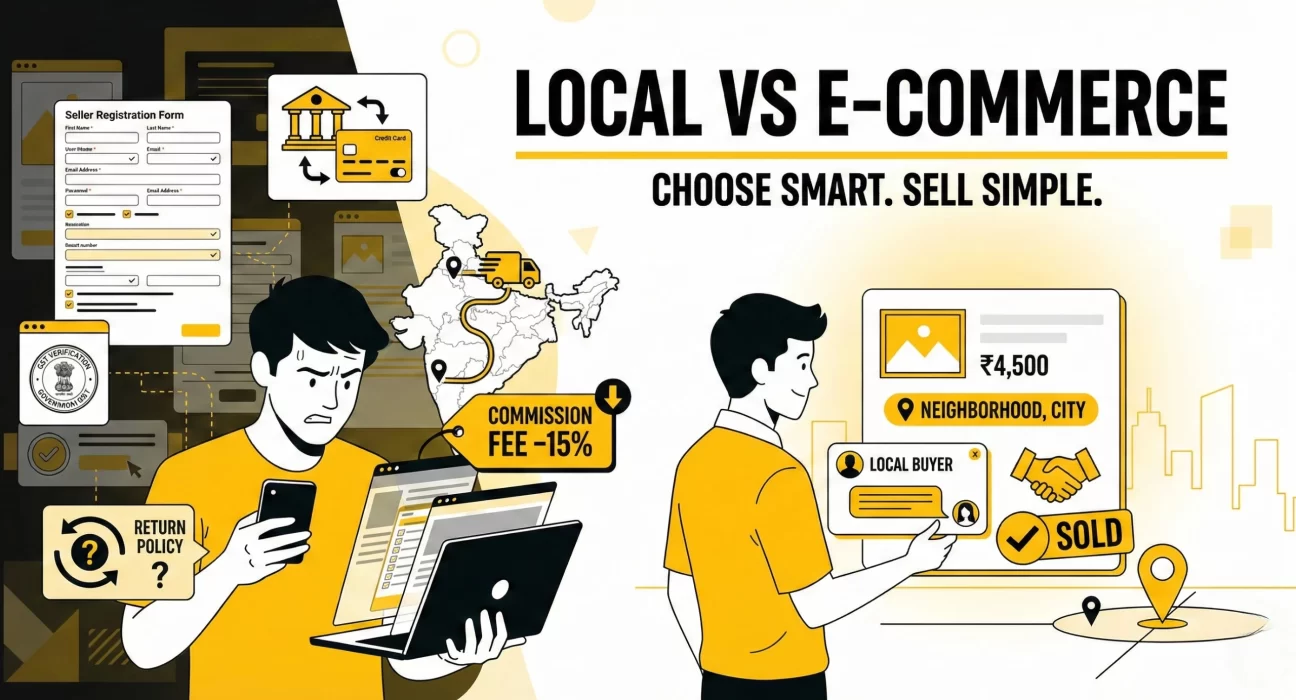
- Registration overhead: Creating seller accounts, linking bank details, uploading ID proofs, waiting for verification.
- Shipping expectations: Buyers assume shipping is included, creating logistics you can’t or don’t want to handle.
- Return policies required: E-commerce culture expects returns if buyers aren’t satisfied, complicated for used items sold as-is.
- Commission and fees: Platforms take cuts of sales, reducing what you actually receive.
- Product listing complexity: Detailed specifications, multiple photos, brand authentication, condition grading time-consuming for a single item.
- Competitive pressure; You’re competing with professional resellers and businesses with better photos, lower prices, and established ratings.
- National visibility wasted: Your sofa is visible to all of India when you only need it seen in your neighborhood.
For local, one-time sales, this complexity works against you.
What Local Platforms Are Designed to Do
Local platforms like Sympl take a fundamentally different approach.
- Individual, occasional selling: Built for people selling a few items, not running businesses.
- Local pickup assumption: Everyone understands items are picked up locally, no shipping coordination.
- As-is transactions: Buyers inspect items in person before buying, no return policies needed.
- Minimal registration: Basic contact information, sometimes not even an account required.
- Simple listings: Photos, description, price, location done.
- Direct buyer-seller contact: Phone numbers or messaging without platform intermediation.
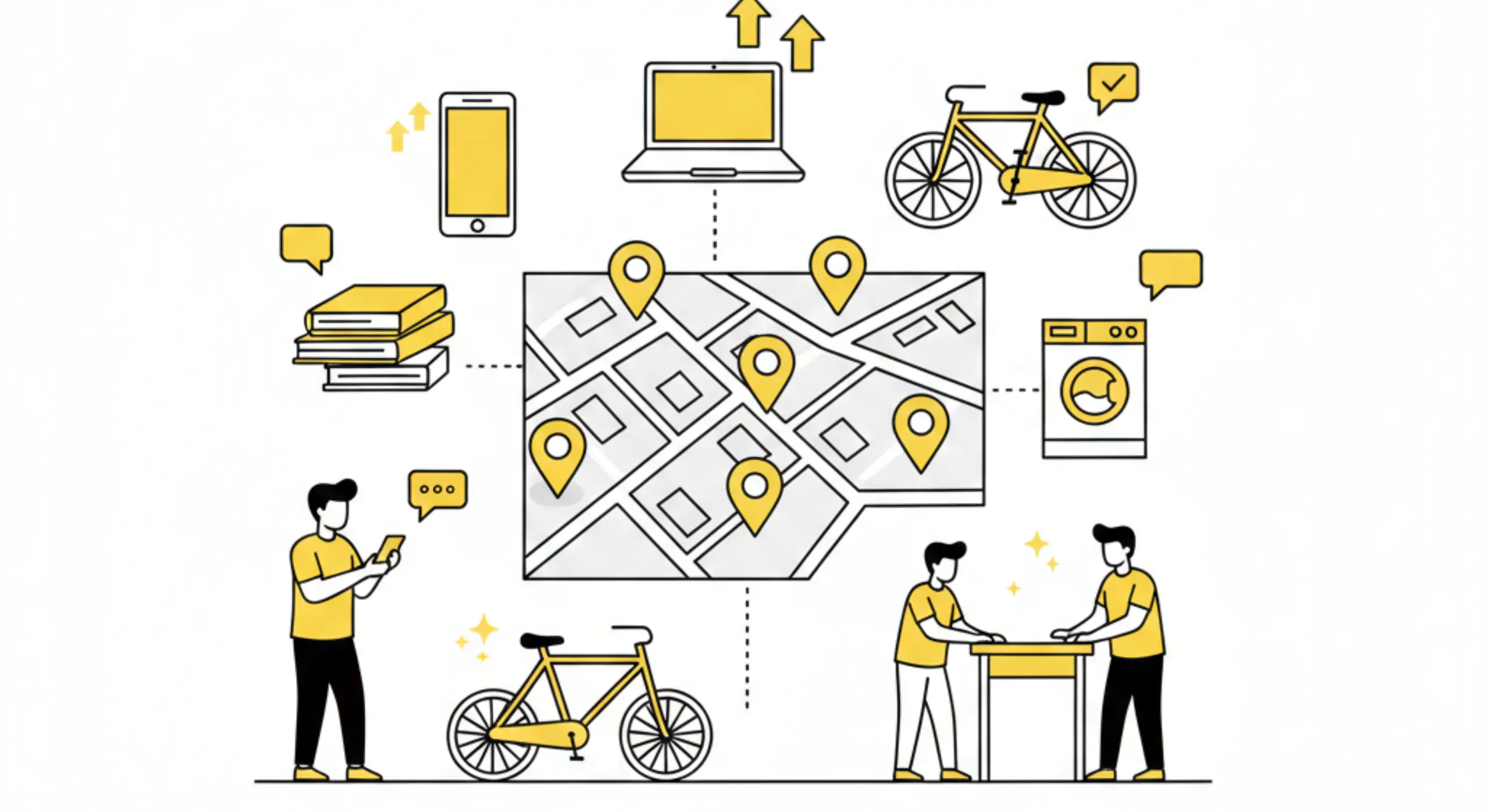
- Geographic focus: Your listing reaches people in your city who can actually come pick it up.
This simplicity matches how most local used-item sales actually work.
Clear Situations: When E-Commerce Apps Make Sense
E-commerce platforms have legitimate uses for certain scenarios.
- You’re selling new products: If you’ve started a small business selling handmade goods, accessories, or retail products, e-commerce infrastructure helps.
- You want national reach: For unique items with niche demand scattered across India, broader visibility helps find buyers.
- You’re comfortable with shipping: If you have access to good packaging materials and courier services and don’t mind coordination, shipping opens more buyers.
- You’re selling regularly: If you’re flipping products or reselling items frequently, investing time in e-commerce setup pays off.
- Brand reputation matters: If you’re building a business identity with reviews and ratings, e-commerce platforms provide that infrastructure.
- You need payment processing: For buyers who insist on digital payment with purchase protection, e-commerce apps offer those features.
These scenarios justify the complexity and costs of e-commerce platforms.
Clear Situations: When Local Platforms Work Better
Most everyday selling situations favor local platforms.
- Selling used furniture: Sofas, beds, tables, wardrobes all require local pickup. E-commerce shipping makes no sense.
- Clearing out appliances. Refrigerators, washing machines, microwaves, heavy, bulky, perfect for local sales.
- One-time sales: Your old bike, laptop from college, or study table when you move—not worth e-commerce registration.
- Quick sales needed: Moving next week and need items gone fast. Local buyers can meet immediately.
- Privacy preference: Don’t want to create seller profiles, link bank accounts, or deal with platform bureaucracy.
- Avoiding fees: Want the full sale amount without commission deductions.
- Straightforward transactions:Prefer meeting buyers, showing items, agreeing on price, and completing sales face-to-face.
For these situations which describe most individual selling in India, local platforms deliver better results with less hassle.
Real Comparison: Selling a Bike
A student in Hyderabad needed to sell his bike before graduation. He tried both approaches.
E-Commerce App Attempt:
- Spent 2 hours creating seller account, uploading documents
- Required bank account linking, PAN card verification
- Listed bike with detailed specifications
- Platform wanted courier coordination for interested buyers
- Buyers from other states contacted asking about shipping costs
- Platform commission would take significant amount
- Return policy expectations made him uncomfortable
- After one week: Too complicated, gave up
Local Platform (Best Classified Sites in Hyderabad):
- Took 10 minutes to post: photos, description, price, area
- Listed on Sympl and similar local classifieds
- Got enquiries from Hyderabad buyers only
- Met three interested buyers over weekend
- One test rode, negotiated slightly, bought it
- Cash payment, no fees, no shipping drama
- After 5 days: Sold at fair price with minimal effort
The local approach matched his actual needs perfectly.
Cost Differences: Hidden and Obvious
Platforms have different cost structures that affect your final earnings.
E-Commerce App Costs:
- Commission fees (often 5-20% of sale price)
- Shipping charges (either you pay or buyer expects it included in price)
- Packaging materials and logistics
- Payment gateway fees
- Potential return shipping costs
- Time cost of managing complex process
Local Platform Costs:
- Usually no listing fees
- No commission on most platforms
- No shipping expenses
- Minimal time investment
- Direct cash or verified digital payment (no gateway fees)
For a ₹10,000 item, e-commerce fees and shipping could reduce your take to ₹8,000-8,500. Local sale gives you the full ₹10,000.
Time Investment: Setup to Sale
Different platforms demand different time commitments.
E-Commerce App Timeline:
- Day 1: 2-3 hours setting up seller account and verification
- Day 2-3: Creating detailed listings with specifications
- Week 1: Managing enquiries about shipping to various cities
- Week 2: Coordinating courier, packaging items
- Week 3-4: Waiting for payment clearance, dealing with potential returns
- Total: Weeks of active management
Local Platform Timeline:
- Day 1: 15 minutes creating simple listing
- Day 2-4: Brief messages with local buyers, arranging viewing
- Day 5: Meeting buyer, inspection, sale completed
- Total: Less than a week, minimal active time
The efficiency difference is dramatic for people with jobs, studies, or families.
Who Benefits from Each Approach
>Different user groups suit different platforms.
E-Commerce Apps Work For:
Small business owners selling products regularly Resellers flipping items for profit at scale Makers and creators selling handmade goods nationally Tech-savvy sellers comfortable with complex platform features People with shipping infrastructure already in place
Local Platforms Work For:
Students selling items when moving or graduating bikes, furniture, books, electronics Families clearing household items appliances, children’s furniture, home goods Working professionals selling used office equipment, upgrading electronics People relocating who need quick sales without shipping coordination First-time sellers overwhelmed by e-commerce complexity Anyone preferring face-to-face transactions and local connections
Most individual sellers in India fall into the second category.
The Indian Context: Why Local Works
India’s buying and selling culture naturally favors local platforms for used items.
- Trust through inspection: Indians prefer seeing and touching items before buying, especially used goods.
- Bargaining expectation: Negotiation is part of the culture, works better face-to-face than through platform messaging.
- Cash preference: Many still prefer cash transactions, easiest in person.
- Shipping skepticism: Concerns about courier damage, delays, or lost packages make local pickup preferable.
- Relationship-based commerce: Even with strangers, meeting in person builds trust that online-only transactions don’t.
Platforms that align with these preferences succeed better for local transactions.
Geographic Relevance: City-Specific Advantages
Local platforms work especially well in cities with active user bases. In cities like Hyderabad, the best classified sites in Hyderabad have developed strong local communities. These platforms understand local neighborhoods, pricing norms, and transaction patterns.
Similarly, Bangalore, Mumbai, Delhi, Pune, and other metros have local platforms or strong local communities within broader platforms where geographic focus makes selling faster and easier. This local relevance means buyers and sellers share context, they know the areas, understand fair pricing for their city, and can coordinate meetings naturally.
When a Hybrid Approach Makes Sense
Sometimes using both types of platforms strategically works.
- Start local, go broader if needed: List on local platforms first for quick, easy sales. If items don’t sell locally, consider e-commerce apps for wider reach.
- Category-based decision: Sell large items locally, smaller shippable items on e-commerce if appropriate.
- Timing-based: If you have time, try e-commerce for better prices. If you’re in a hurry, go local for faster sales.
- Value-based: Very low-value items (under ₹500) might not be worth ecommerce fees. High-value rare items might justify it.
The key is making conscious choices based on item characteristics and your priorities, not defaulting to one approach for everything.
How Simple Classifieds Simplify the Decision
Platforms like Sympl eliminate the decision paralysis by focusing purely on local. No shipping options, no national visibility, no e-commerce features, just straightforward local listings connecting nearby buyers and sellers.
This focused approach removes complexity and makes the platform easy to use for anyone, regardless of technical comfort or selling experience. You’re not trying to figure out logistics, fees, shipping, returns, you’re just posting what you have and connecting with someone nearby who wants it.
Making the Right Choice for Your Situation
Here’s a practical decision framework.
Use e-commerce apps when:
- You’re selling new or refurbished products
- You’re operating a small business
- National reach is necessary for your item type
- You’re comfortable with platform fees and complexity
- Shipping is practical for your items
- You’re selling regularly enough to justify setup time
Use local platforms when:
- You’re selling used furniture, appliances, or bulky items
- You want quick sales without bureaucracy
- You prefer face-to-face transactions
- You’re selling one-off items during life transitions
- You want to avoid fees and keep full sale amounts
- You value simplicity and efficiency
- You’re in cities with active local buying communities
For most everyday selling, clearing out items during moves, upgrading electronics, selling outgrown children’s items, and disposing of furniture, local platforms are the practical choice.
They match how these transactions naturally work in India: locally, directly, and simply, without the overhead of infrastructure built for professional e-commerce.
Conclusion
The choice between e-commerce apps and local platforms isn’t about which is better in absolute terms, it’s about which matches your actual needs. E-commerce platforms serve professional sellers shipping products nationally.
They offer powerful features but come with complexity, fees, and logistics that don’t make sense for most individual, local sales. Local platforms and Sympl Classifieds serve everyday people selling used items to nearby buyers. They offer simplicity, speed, and direct transactions without unnecessary overhead.
For students selling bikes before graduation, families clearing appliances during moves, or working professionals upgrading electronics, local platforms deliver better results, faster sales, full earnings, minimal hassle, and the confidence that comes from face-to-face transactions with people from your own city.
That’s not marketing, it’s just the practical reality of how local buying and selling works best in India’s context. Simple, direct, and focused on actual results rather than features you don’t need.