

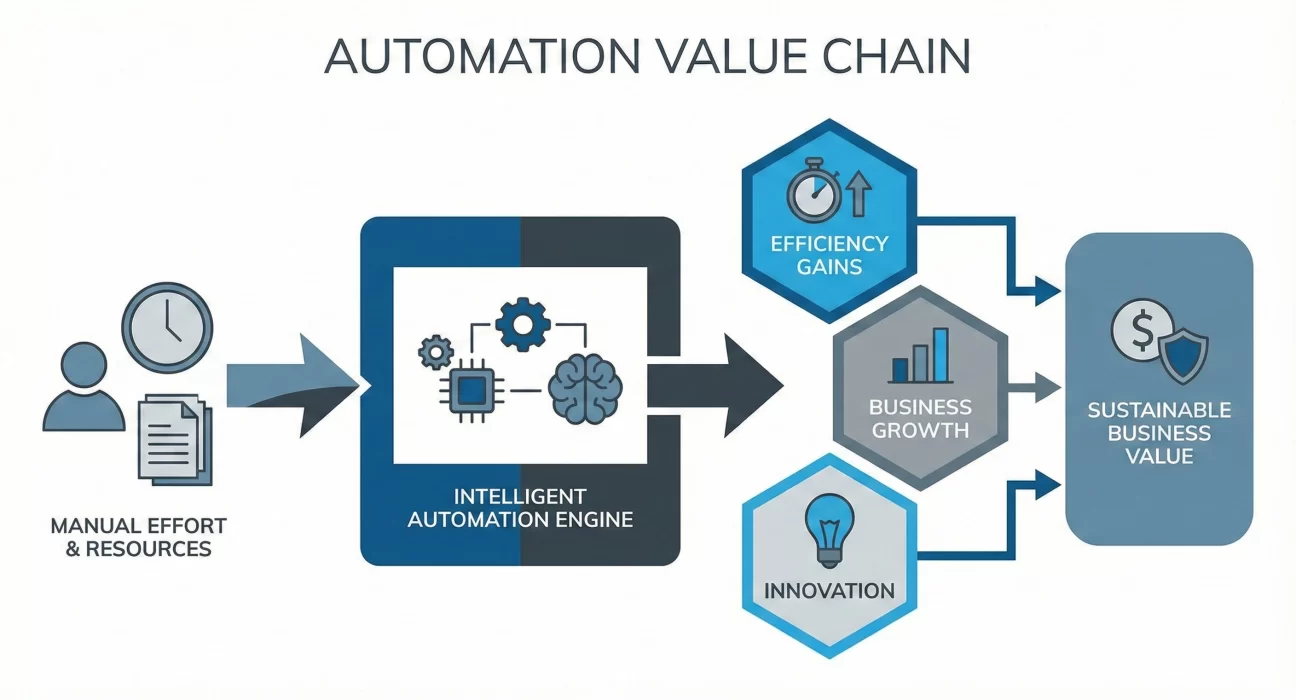
Most large enterprises now accept that automation is necessary. The question is no longer whether to automate, but how to do it without creating new problems. Governance exists to manage risk, ensure compliance, and protect the business. Automation exists to move faster, reduce costs, and improve consistency. These two goals often conflict, and that conflict becomes more difficult to manage as scale increases.
The problem is not that governance is wrong or that automation is risky. The problem is that most governance frameworks were designed for slower, manual processes. They assume that changes happen infrequently, that people will follow documented procedures, and that there is time to review decisions before they take effect. Automation challenges all of those assumptions. Changes happen continuously. Systems make decisions without human intervention. And by the time someone reviews what happened, the business impact has already occurred.
Senior leaders face a practical dilemma. If governance is too strict, automation projects stall. Teams spend months getting approvals, writing documentation, and satisfying requirements that do not actually reduce risk. If governance is too loose, the business gets exposed. Systems fail in production. Data gets mishandled. Compliance gaps emerge. Neither outcome is acceptable, but most enterprises struggle to find a workable middle ground.
Why Traditional Governance Fails at Scale
Traditional governance relies on control points. Change advisory boards review proposed changes. Security teams approve access requests. Compliance officers check that policies are being followed. This works when changes are infrequent and well-defined. It breaks down when automation introduces hundreds or thousands of changes every week.
The first problem is volume. A single automation platform might generate more change requests in a month than a traditional IT department handled in a year. Review boards cannot keep up. They either become bottlenecks or start waving things through without proper scrutiny. Both outcomes defeat the purpose of governance.
The second problem is visibility. Automated systems often span multiple departments, integrate with external services, and touch data that moves across different jurisdictions. No single person understands the full picture. Governance processes that rely on individual judgment or manual review cannot scale when the environment is this complex.
The third problem is timing. Governance processes assume there is time to review, discuss, and decide. Automation often requires real-time decisions. A system that waits for approval before taking action is not really automated. But a system that acts without oversight creates unacceptable risk. Most enterprises end up with workarounds, exceptions, and informal arrangements that undermine the governance framework entirely.
These problems are not hypothetical. They show up in every large automation program. Teams build shadow systems to avoid governance delays. Audit findings pile up because no one has time to address them properly. Production incidents occur because changes were not reviewed carefully. And senior leaders lose confidence in both the automation program and the governance function.
What Actually Works
Effective governance for automation requires a different approach. Instead of controlling every change, the focus shifts to controlling the environment where changes happen. Instead of reviewing decisions after they are made, the focus shifts to building systems that make correct decisions automatically. This is not about removing governance. It is about embedding governance into the automation itself.
The first step is defining clear boundaries. Not every automated process carries the same risk. A system that sends internal notifications is different from a system that processes financial transactions. Governance should be proportional to risk. High-risk processes need strict controls. Low-risk processes need basic oversight. The problem is that most enterprises treat everything the same way, which either slows down the entire business or creates gaps in protection.
The second step is automation of governance itself. Compliance checks should run automatically. Access controls should be enforced by the platform, not by manual review. Audit trails should be generated without requiring someone to document what happened. This does not eliminate the need for human judgment, but it removes the bottleneck of manual verification for routine decisions.
The third step is clear accountability. When something goes wrong, someone needs to own the problem. In many large enterprises, accountability for automated systems is unclear. The business owns the process. IT owns the platform. A vendor might own the software. And the governance team owns the policy. When an incident occurs, everyone points at everyone else. Effective governance requires clear ownership, with defined escalation paths and explicit decision rights.
The fourth step is continuous monitoring instead of periodic review. Traditional governance relies on audits and assessments that happen quarterly or annually. By the time issues are identified, they have already caused problems. Automation allows for real-time monitoring of policy compliance, system performance, and risk indicators. This shifts governance from reactive to proactive, which is essential at scale.
How Ozrit Approaches Enterprise Automation Governance
Ozrit works with large enterprises to implement automation programs that deliver results without creating governance problems. The approach is practical and execution-focused. Senior partners stay involved throughout the program, which means there is clear accountability and no ambiguity about who owns delivery.
The team typically includes experienced enterprise architects, automation specialists, and governance experts who have worked on large-scale programs before. This matters because implementing governance for automation requires understanding both the technical environment and the organizational context. Junior teams often miss the political and procedural complexities that cause programs to fail.
Onboarding is structured to reduce risk from the start. Ozrit does not begin building automation until the governance framework is defined and agreed. This includes identifying risk boundaries, defining approval workflows, setting up monitoring and audit capabilities, and establishing clear ownership for each automated process. This upfront work takes time, but it prevents the rework and delays that occur when governance is treated as an afterthought.
Delivery timelines are realistic. Most large automation programs take six to twelve months to move from design to production, depending on scope and complexity. Ozrit does not promise faster timelines by cutting corners on governance. Instead, the focus is on structured delivery with clear milestones, regular reviews, and transparent communication about progress and risks.
The team provides 24/7 support for production systems, which is essential for enterprises that operate globally. Automation does not stop at 5pm, and neither does the support model. This includes monitoring, incident response, and ongoing optimization to ensure that automated systems continue to meet governance requirements as the business changes.
Ozrit also brings capacity that most internal teams lack. Large automation programs require specialized skills in areas like workflow orchestration, API integration, data governance, and compliance automation. Building this capability internally is expensive and time-consuming. Working with an experienced external team allows enterprises to move faster while maintaining control over strategic decisions.
Making Governance an Enabler
The best outcome is when governance becomes an enabler rather than an obstacle. This happens when governance processes are designed with automation in mind from the beginning. It requires treating governance as part of the automation architecture, not as a separate function that reviews work after it is done.
Senior leaders should expect their automation partners to understand this. A vendor that treats governance as someone else’s problem will create delivery risk. A partner that builds governance into the design will deliver systems that are both fast and compliant.
The value is not just in reducing risk. Well-governed automation also builds trust across the organization. Business units become more willing to adopt automated processes when they see that controls are in place. Audit and compliance teams become allies rather than obstacles. And the automation program itself becomes more sustainable because it is built on a foundation that can scale.
Governance does not have to slow the business. But it does require intentional design, experienced execution, and senior leadership that understands the difference between control and enablement. The enterprises that get this right are the ones that will gain the full benefit of automation without creating new risks in the process.