
Most enterprises understand that their digital experience matters. They invest in redesigns, upgrade their platforms, and launch new features. What many fail to recognize is that digital experience should be treated as a strategic asset with measurable value, not just a collection of projects and initiatives.
An asset requires ongoing investment, careful maintenance, and protection from depreciation. It generates returns that can be tracked and optimized. It has a value that increases or decreases based on how it’s managed. When enterprises treat digital experience this way, they make fundamentally different decisions about investment, ownership, and governance.
The problem is that most enterprises still treat digital experience as a cost center focused on project delivery. They fund redesigns when the current site looks dated. They add features when business units request them. They fix problems when customers complain. This reactive approach means digital experience never becomes a true competitive advantage. It’s always catching up rather than leading.
What Makes Digital Experience an Asset
Assets generate value over time. For digital experience, this value shows up in customer acquisition cost, conversion rates, customer lifetime value, and brand perception. A well-designed, high-performing digital experience reduces the cost of acquiring customers because word-of-mouth and organic search improve. It increases conversion because customers can find what they need and complete transactions smoothly. It extends lifetime value because satisfied customers return and spend more.
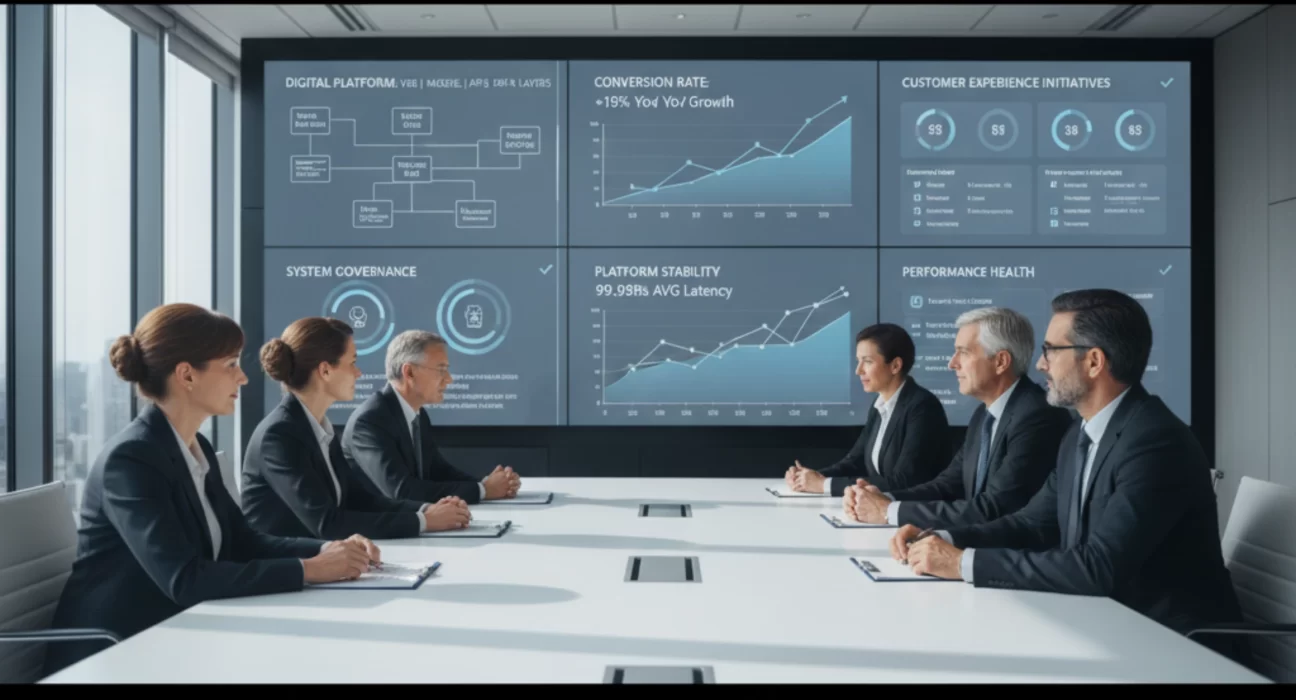
The difference between an enterprise with digital experience as an asset versus one treating it as a cost center is visible in the metrics. The first sees improving digital metrics year over year. Conversion rates increase. Average order values grow. Customer satisfaction scores improve. The second sees stagnant or declining metrics despite constant investment in new features and redesigns.
The distinction comes down to whether you’re building capabilities that compound over time or just maintaining current functionality. Assets appreciate. Costs depreciate. Digital experiences that are built on solid foundations, maintained properly, and continuously improved behave like assets. Those that accumulate technical debt, fragment across initiatives, and deteriorate between major redesigns behave like costs.
The Depreciation Problem
Physical assets depreciate in predictable ways. Equipment wears out. Buildings need maintenance. Vehicles require replacement. Enterprises understand this and plan accordingly with depreciation schedules and replacement cycles.
Digital experiences also depreciate, but in less obvious ways. Code becomes outdated as frameworks evolve and security vulnerabilities are discovered. Designs become dated as user expectations change. Integrations become fragile as underlying systems evolve. Performance degrades as data volumes grow and new features add complexity.
Many enterprises don’t account for this depreciation properly. They launch a new digital experience and expect it to remain current for five or ten years with minimal investment. Two years later, the experience feels dated. Four years later, it’s causing real business problems. Six years later, they’re planning another expensive rebuild.
This cycle is expensive and avoidable. The enterprises that treat digital experience as an asset invest in continuous improvement and maintenance. They allocate budget for technical debt reduction, performance optimization, and incremental feature improvements. They monitor the health of their digital experience the same way they monitor the condition of physical assets.
The result is that their digital experience appreciates rather than depreciates. It gets faster, more capable, and more valuable over time. And they avoid the expensive rebuild cycles that plague enterprises treating digital experience as a project-based cost.
The Governance Challenge
Assets require governance. Someone needs to be accountable for the value of the asset, the returns it generates, and the investments required to maintain it. For physical assets, this governance is well established. For digital experience, it’s often unclear or fragmented.
In many enterprises, digital experience governance is split across multiple groups. Marketing owns the content and brand. IT owns the infrastructure and security. Product teams own specific features. Operations owns performance and reliability. Nobody owns the end-to-end experience or its business outcomes.
This fragmented ownership leads to predictable problems. Marketing wants to add rich content that slows page loads. IT wants to maintain security standards that add friction to user flows. Product teams want to launch features quickly without proper performance testing. Operations wants stability and resists changes. Each group optimizes for its own goals, and the customer experience suffers.
Better governance means having clear accountability for the digital experience as a whole. This doesn’t mean one person makes every decision. It means someone is responsible for the business outcomes, can make tradeoffs between competing priorities, and has the authority to ensure the experience improves over time.
Without this governance, digital experience becomes a series of compromises that satisfy nobody. Features launch late because they get stuck in approval processes. Performance degrades because nobody can prioritize optimization work. The customer experience fragments because different teams make different decisions about design and functionality.
Investment Discipline
Treating digital experience as an asset changes how you think about investment. Instead of funding individual projects, you’re maintaining and improving a valuable asset that generates returns.
This means regular investment in areas that don’t create visible new features but maintain the health of the asset. Technical debt reduction. Performance optimization. Security updates. Accessibility improvements. Code quality. Testing coverage. These investments don’t show up as new capabilities customers can see, but they prevent depreciation and enable future improvements.
Many enterprises struggle to fund this maintenance work because it’s hard to justify in traditional project-based budgeting. A redesign project with clear deliverables is easy to fund. Ongoing technical debt reduction is harder to justify, even though the long-term return is often higher.
The enterprises that succeed are those that allocate a portion of their digital experience budget to asset maintenance separate from new features and projects. This might be 20% to 30% of total spending. It seems like overhead, but it’s actually the investment that allows the remaining 70% to 80% to be productive.
Without this maintenance investment, development velocity decreases over time. Features that should take weeks take months because teams are working around technical debt. Simple changes break unexpected things because the codebase is fragile. Testing takes longer because nobody is confident about side effects. Eventually, you’re in a position where a rebuild is the only option.
Measuring Asset Value
Physical assets appear on balance sheets with clear valuations. Digital experience is harder to value, but the value is real and can be measured through business impact.
The most direct measure is revenue attribution. How much revenue flows through digital channels? How has this changed over time? What’s the incremental revenue from digital experience improvements? These metrics directly connect digital experience to business value.
Customer acquisition and retention metrics also reflect digital experience value. If your digital experience is strong, organic traffic increases, paid acquisition costs decrease, and customer retention improves. If it’s weak, you see the opposite trends. Tracking these metrics over time shows whether your digital experience is appreciating or depreciating as an asset.
Operational efficiency is another dimension of value. A well-designed digital experience reduces support costs because customers can self-serve. It reduces fulfillment costs because the checkout process works smoothly. It reduces internal costs because employees can use the same platforms and capabilities.
The enterprises that measure these outcomes consistently can make data-driven decisions about digital experience investment. They can quantify the return on technical debt reduction or performance optimization. They can justify maintenance spending by showing how it maintains the asset value. And they can identify areas where additional investment would generate the highest returns.
The Technology Foundation Question
Digital experience assets need solid technology foundations. This doesn’t mean using the latest frameworks or following technology trends. It means choosing architectures and platforms that can evolve without constant rebuilds.
Many enterprises make technology choices based on what’s popular or what their teams know, rather than what will be maintainable and extensible for years. They choose monolithic platforms that work well initially but become bottlenecks as requirements evolve. They build custom solutions that solve immediate problems but become expensive to maintain. They adopt frameworks that seem promising but lack long-term support.
The result is that their technology foundations become constraints on digital experience improvement. Simple changes require extensive modifications because the architecture wasn’t designed for flexibility. New capabilities require working around limitations in chosen platforms. Performance optimization requires architectural changes that are too expensive to justify.
Better to invest in technology foundations that can evolve incrementally. This means modular architectures where components can be upgraded or replaced independently. It means choosing stable platforms with clear upgrade paths. It means building with testability and maintainability as primary requirements, not afterthoughts.
These decisions have long-term implications for whether your digital experience behaves as an appreciating asset or a depreciating cost. The upfront investment in solid foundations pays returns for years through faster development, easier maintenance, and more reliable operations.
How Ozrit Approaches Digital Experience Programs
At Ozrit, we’ve helped several enterprises transition from treating digital experience as a cost center to managing it as a strategic asset. Our approach focuses on building sustainable capabilities rather than just delivering projects.
We start with an assessment that examines not just the current state of your digital experience, but also the organizational and investment patterns that created it. We look at governance structures, budget allocation, technical foundations, and operational practices. This assessment typically takes three to four weeks and involves our senior team working with stakeholders across your organization.
The goal is to understand whether your current approach can support digital experience as an asset or whether fundamental changes are needed. Sometimes the technology is fine but the governance is unclear. Sometimes the organization is ready, but the technical debt is too severe. Sometimes both need attention.
Based on this assessment, we develop a roadmap that addresses both immediate needs and long-term asset management. This isn’t a single project with a fixed end date. It’s a transition to a sustainable operating model where digital experience continuously improves and generates increasing returns.
We typically structure this work in overlapping phases. Early phases focus on critical improvements that demonstrate value and build momentum. Middle phases establish the governance, processes, and technical foundations for sustainable asset management. Later phases transition to ongoing optimization and improvement with your teams in the lead.
Each phase has a dedicated senior delivery lead from our team who owns the execution and outcomes. This person coordinates across workstreams, manages dependencies, and ensures consistent progress toward the goal of treating digital experience as an asset. They’re experienced leaders who have managed similar transitions at other enterprises and understand both the technical and organizational challenges.
Our onboarding process gets teams productive quickly. We assign engineers from our team of 250+ developers and specialists who have worked on enterprise digital experience platforms. They spend their first two to three weeks understanding your architecture, business requirements, and organizational context. By week four, they’re contributing to improvements and helping establish better practices.
We handle the difficult technical work that many asset management programs require. Reducing technical debt. Improving performance. Modernizing architecture. Building testing and monitoring capabilities. Our engineers have done this work before at scale and know how to make meaningful progress without disrupting ongoing operations.
Because we operate across time zones with 24/7 coverage, we can maintain consistent momentum on transformation programs and respond quickly when issues arise. Digital experience asset management requires sustained attention, not just periodic projects, and our operational model supports this.
The Long View
The enterprises that build lasting competitive advantages through digital experience are those that take the long view. They recognize that digital experience is an asset requiring sustained investment, careful governance, and continuous improvement.
This perspective changes everything. It shifts focus from project delivery to outcome optimization. It justifies investments in foundations and maintenance that don’t create visible new features but prevent depreciation. It creates accountability for business results rather than just technical delivery.
The compounding returns from this approach are substantial. Year after year, your digital experience gets stronger while competitors are stuck in expensive rebuild cycles. Your customer acquisition costs decrease while theirs increase. Your conversion rates improve while theirs stagnate. And the gap widens over time because assets that appreciate consistently outperform those that depreciate and require periodic replacement.
Digital experience has become too important to business outcomes to be treated as anything less than a strategic asset. The question is whether you’re managing it that way or still approaching it as a series of projects and initiatives that never quite add up to sustainable competitive advantage.